Running a trucking or logistics operation means juggling vehicles, drivers, customers, regulations and tight margins at the same time. When that information lives in phone calls, whiteboards and spreadsheets, dispatchers spend their day chasing updates instead of planning loads.
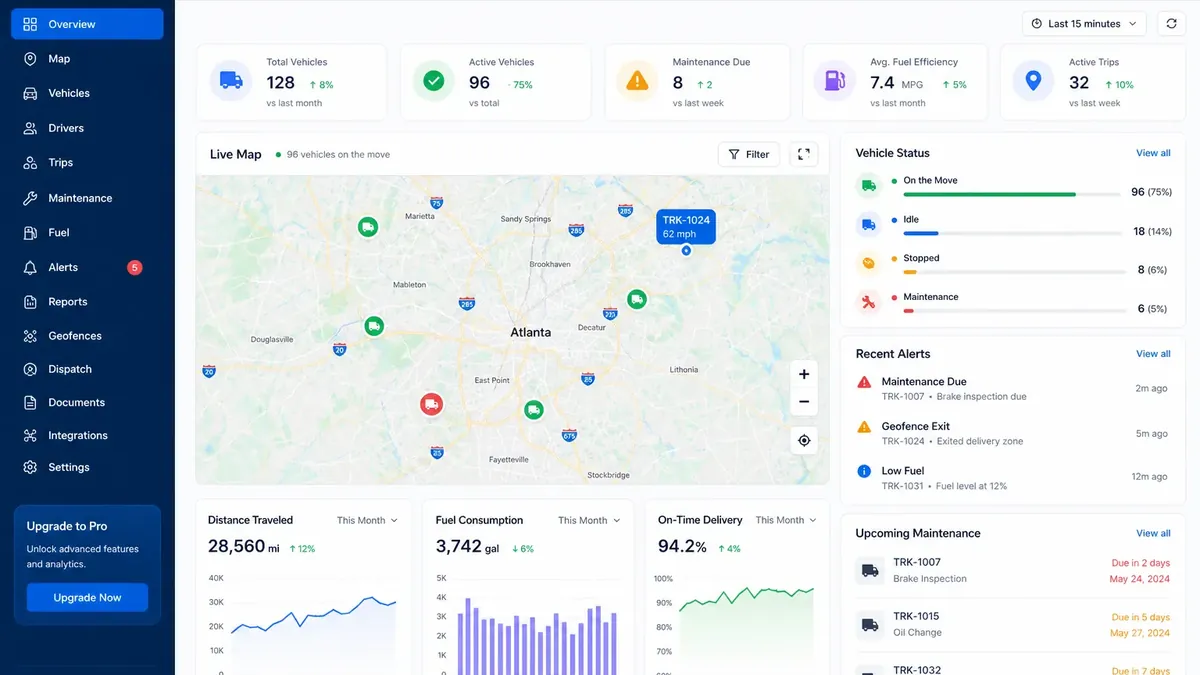
Truck fleet management software brings all of it into one system, so managers can see what is happening across the fleet in real time and act before small problems become expensive ones.
What fleet management software does
At its core, fleet software answers four questions at any moment:
- Where are my vehicles? Live GPS location, speed and trip status.
- What are they doing? Assigned loads, stops, delivery status and proof of delivery.
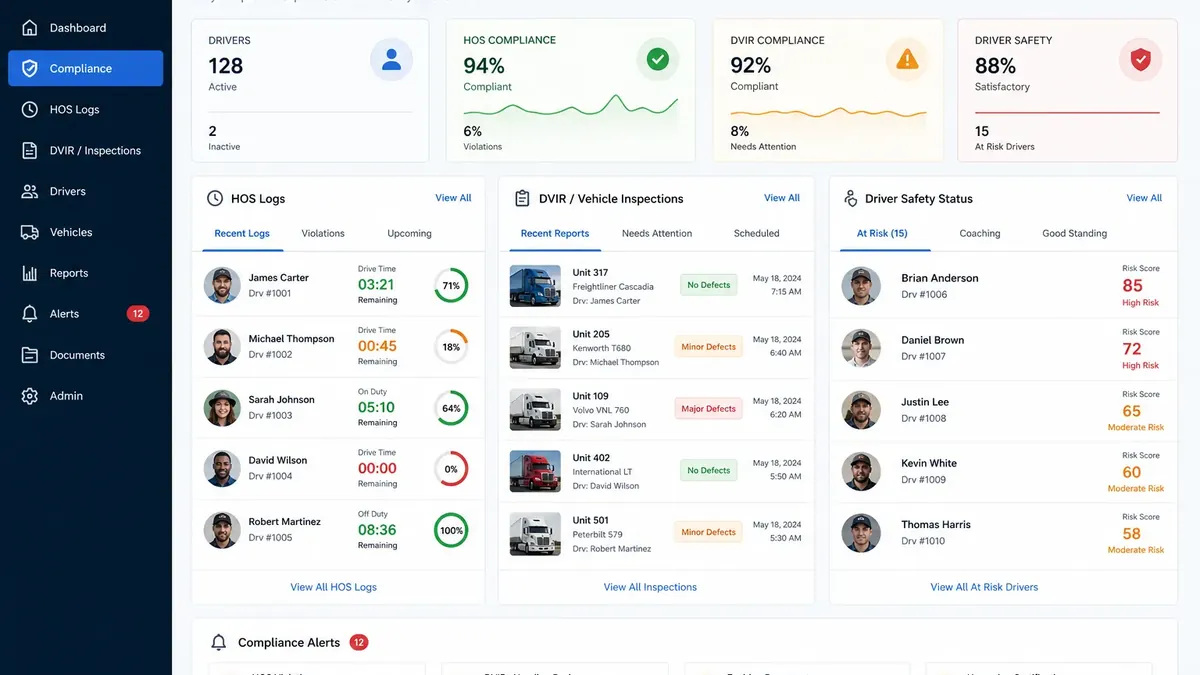
- Are we compliant and safe? Hours of service, inspections, driver behaviour and documents.
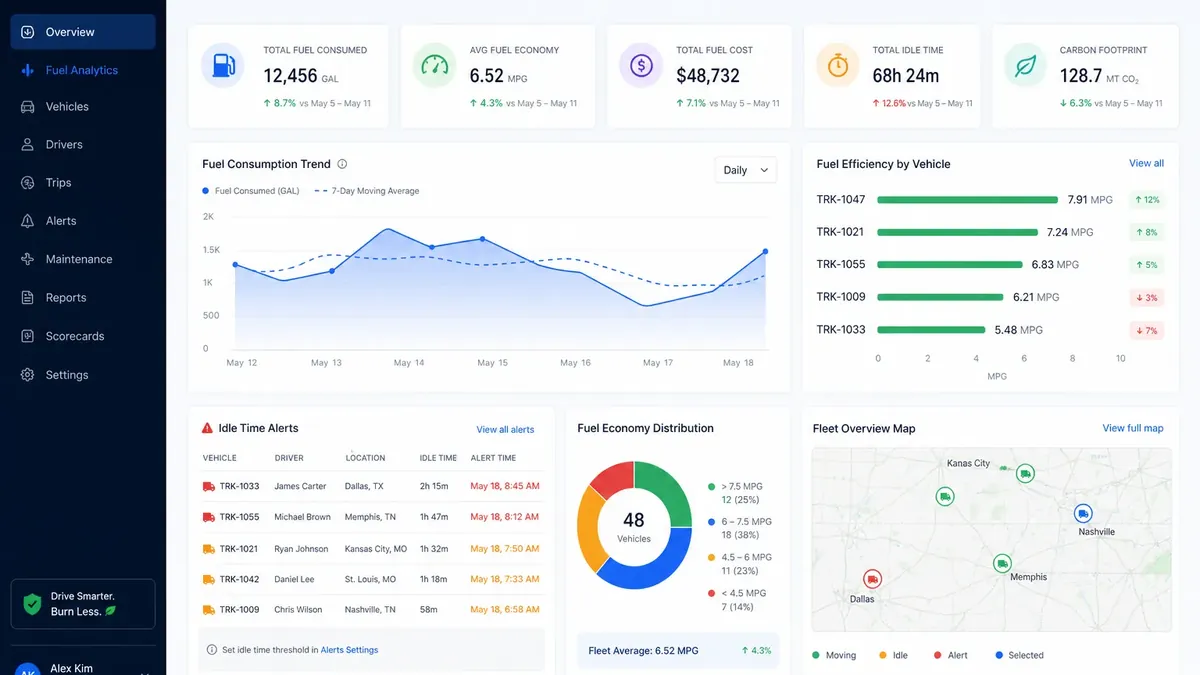
- What is it costing us? Fuel, idle time, maintenance and cost per mile or per trip.
The core features to look for
Real-time GPS tracking
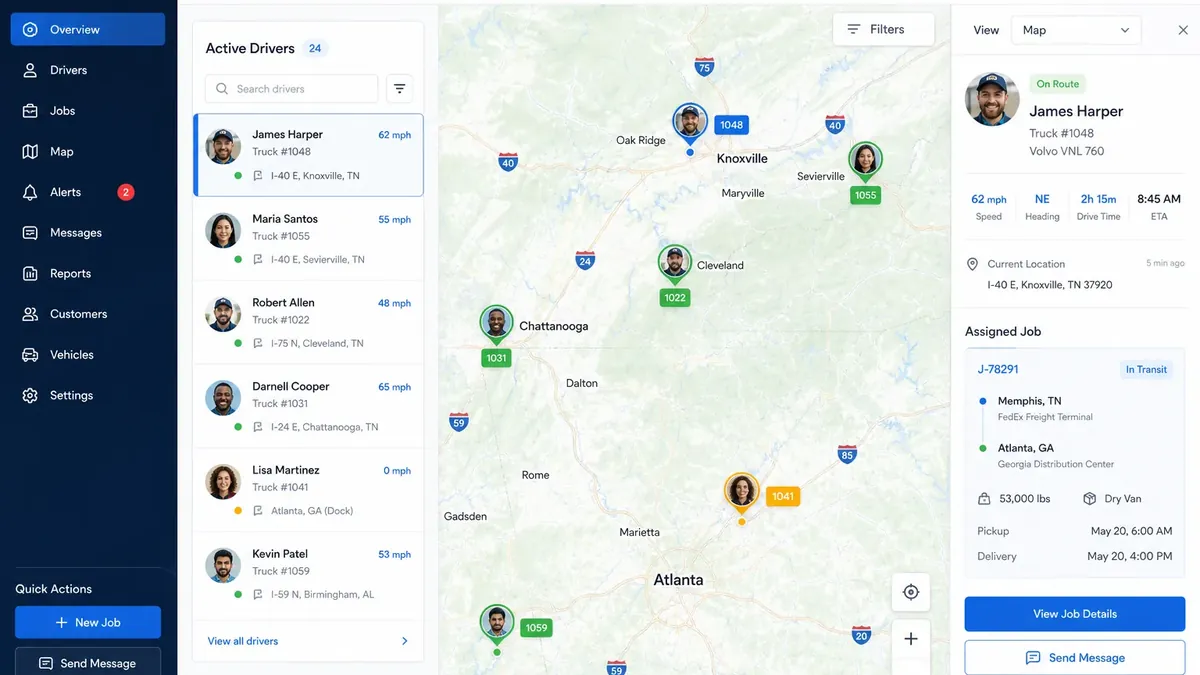
Live vehicle locations on a map, trip history and geofence alerts when trucks arrive at or leave a customer site. This removes most "where is the truck?" calls and lets you give customers accurate arrival times.
Dispatch and load management
Create jobs, assign them to the right driver and vehicle, and send details straight to the driver's phone. Good dispatch tools show driver availability and location so you can make the best assignment quickly.
Route optimisation
Planning routes with traffic, stop order and vehicle restrictions in mind reduces miles driven, fuel used and late deliveries.
Driver mobile app
Drivers should be able to receive dispatches, view routes, complete inspections, report issues and capture proof of delivery with photos and signatures, without paperwork.
Compliance and safety
For US fleets, this means supporting ELD integration, hours of service (HOS) tracking, DVIR records and pre-trip inspections. Fatigue management and break scheduling help reduce risk and keep drivers within legal limits.
Maintenance management
Service schedules based on mileage, engine hours or dates, with alerts before maintenance is due and a full history for each vehicle.
Fuel and cost analytics
Fuel consumption, idle time and cost per vehicle help you find where money is leaking and which drivers or routes need attention.
Reporting
On-time delivery rate, utilisation, fuel efficiency, maintenance cost and safety events, available without exporting data into spreadsheets.
How to choose the right platform
- Fit for your fleet type. Long-haul, regional delivery, construction, cold chain and distribution fleets have different priorities. Make sure the software supports yours.
- Hardware flexibility. Check whether it works with your existing GPS devices and ELDs, or whether the vendor can supply them.
- Integrations. Accounting, fuel cards, ERP and customer systems should connect, so data is not typed in twice.
- Driver experience. If the driver app is hard to use, adoption will suffer. Ask for a demo from the driver's point of view.
- Scalability and pricing. Per-vehicle pricing is common. Make sure costs stay predictable as the fleet grows.
- Implementation time and support. Ask how long go-live takes and what training is included.
- Security. Look for cloud hosting, role-based access and regular backups.
Questions to ask in a demo
- Show me how a dispatcher assigns a load and how the driver receives it.
- How do HOS and inspection records appear for an audit?
- What alerts do managers get, and can we customise them?
- Which reports would I use every week to cut costs?
- How long did your last customer of our size take to go live?
Rolling it out successfully
Start with the features that solve your biggest daily problem, usually tracking and dispatch. Train dispatchers and drivers together, explain why the change helps them, and review the first month's reports as a team. Add maintenance, fuel analytics and advanced reporting once the basics are part of the routine.
The Viqsa approach
Viqsa Truck Management combines real-time fleet tracking, intelligent dispatch, route optimisation, job and delivery management with digital proof of delivery, maintenance, fuel analytics and automated reporting in one platform. Compliance tools cover ELD integration, HOS tracking, DVIR and pre-start inspections, and driver apps are available for Android and iOS. It can work with your existing GPS and ELD hardware and integrates with accounting systems, fuel cards and ERPs.
Key takeaway: The right fleet management software gives dispatchers, drivers and managers one shared, real-time view of the operation. Prioritise tracking, dispatch and compliance, check hardware and integration fit, and choose a platform your drivers will actually use.