Every mile a truck drives without a paying load costs fuel, driver time and wear, without earning revenue. Add delays, missed appointments and constant phone calls, and it is easy to see why dispatch has such a big effect on a fleet's profitability.
Better dispatching is not about working harder. It is about having the right information at the right moment and a process that uses it.
What are empty miles?
Empty miles, often called deadhead miles, are the distance a truck travels without cargo: driving to a pickup, returning from a delivery or repositioning between jobs. Some empty miles are unavoidable, but many come from planning decisions made without full visibility.
1. Start with real-time visibility
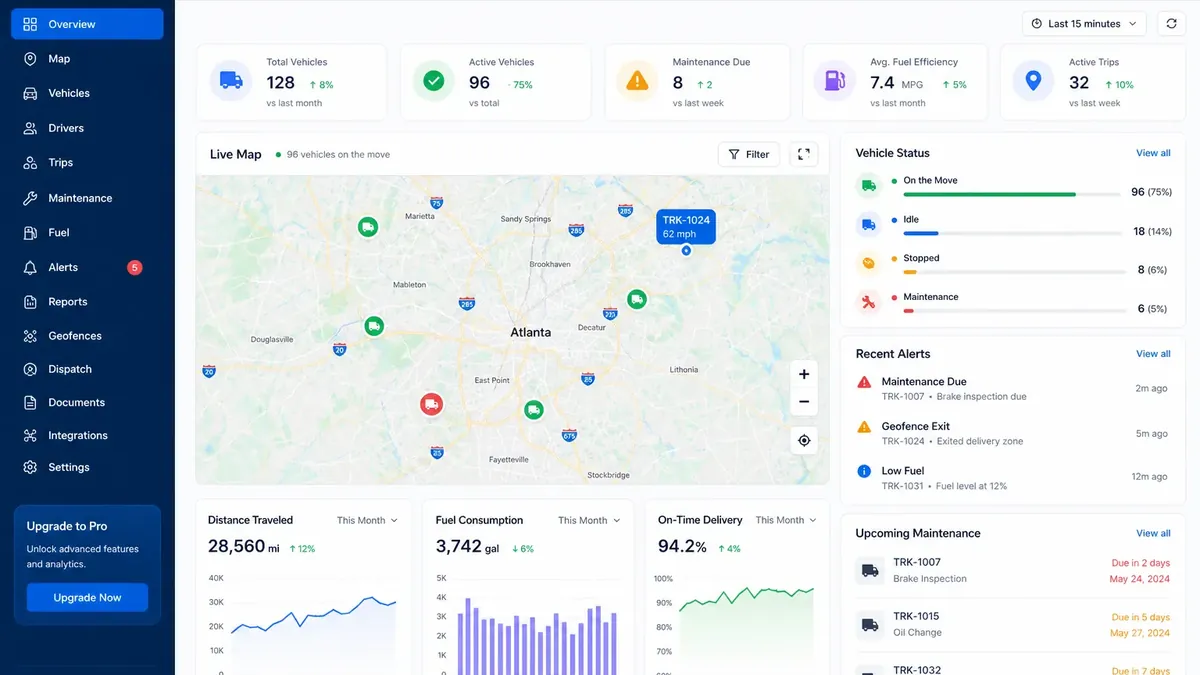
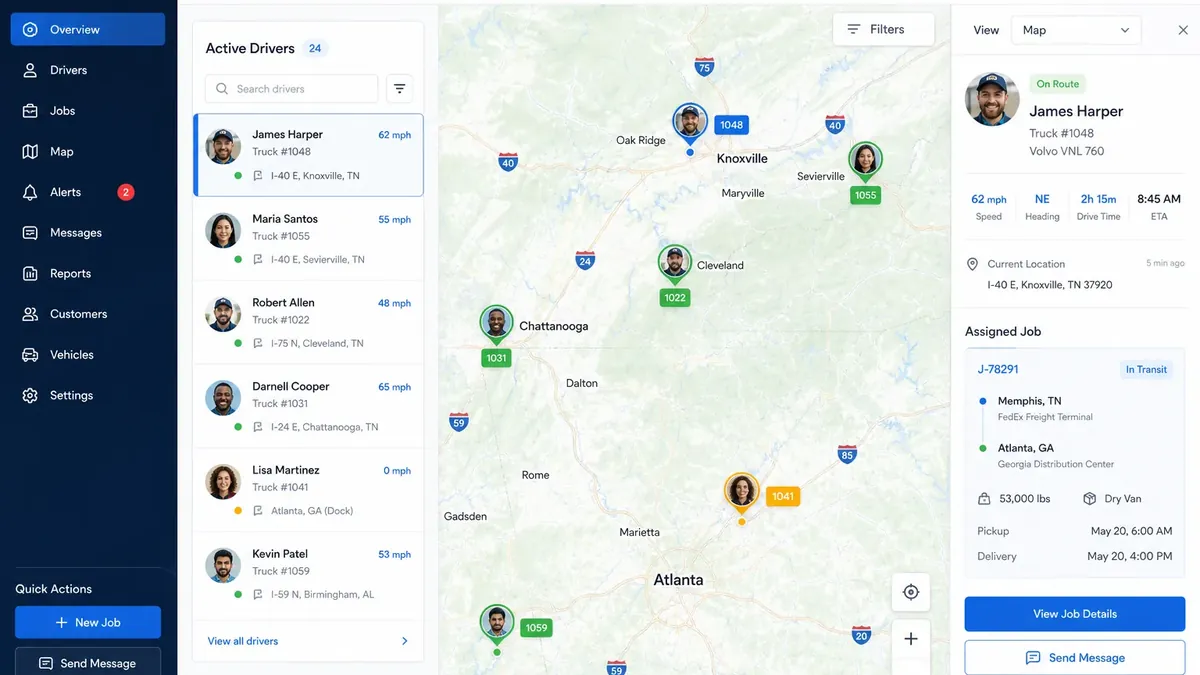
Dispatchers cannot make good decisions if they do not know where trucks are. Live GPS locations, trip status and estimated arrival times let dispatchers:
- Assign new loads to the closest available truck
- Spot delays before customers call
- Rebalance work when a vehicle breaks down or a driver runs short on hours
2. Plan backhauls and multi-stop routes
Look at where each truck will finish its day before assigning the next load. Pairing an outbound delivery with a nearby pickup, or grouping stops in the same area, turns empty return trips into paid ones.
3. Check driver hours before you assign
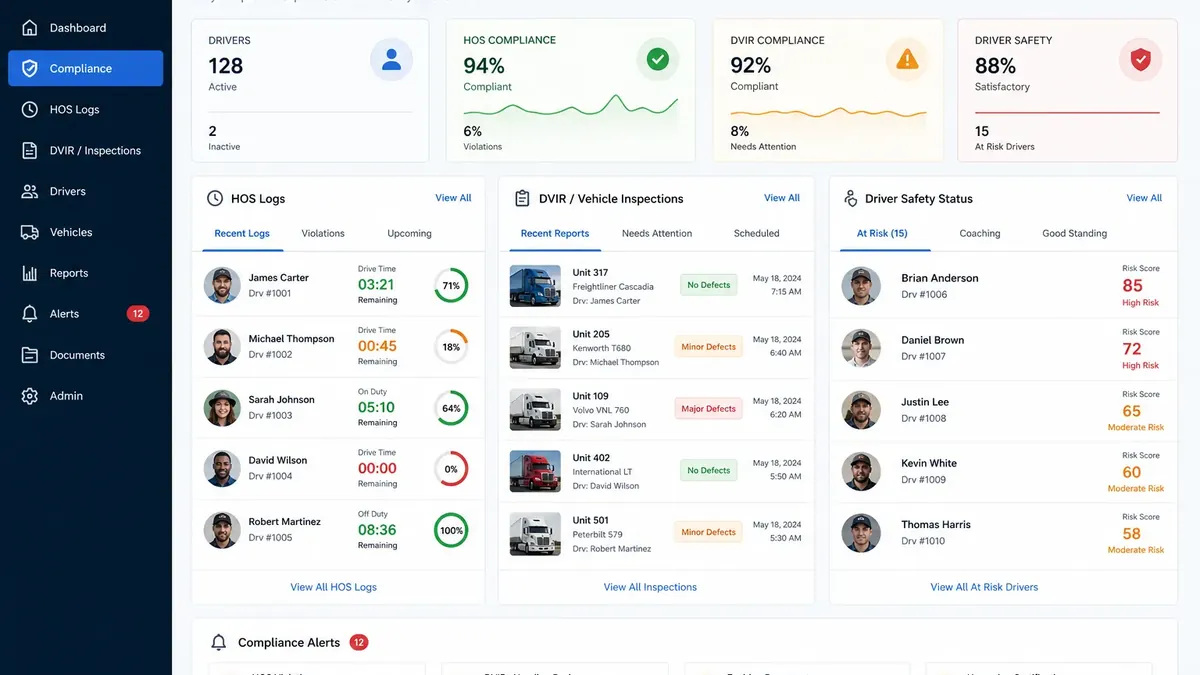
A load that looks perfect on the map is no use if the driver does not have enough hours left to complete it legally. Show available hours next to each driver so assignments are realistic the first time.
4. Send complete job details digitally
Phone calls and text messages lead to missed details. Sending the pickup address, contacts, delivery windows, special instructions and documents straight to the driver's app reduces mistakes and repeat calls.
5. Use route optimisation
Routing that accounts for traffic, stop order, delivery windows and vehicle restrictions shortens trips and improves on-time performance. It also makes estimated arrival times more reliable for customers.
6. Capture proof of delivery instantly
Digital proof of delivery, with photos, signatures and timestamps, closes the job the moment it is complete. Billing can start sooner, disputes are easier to resolve and dispatchers know the truck is free for the next load.
7. Keep customers informed automatically
Many dispatcher calls are customers asking where their delivery is. Sharing live status and arrival estimates reduces those calls and improves the customer experience.
8. Review the numbers every week
Track a few key metrics and look for patterns:
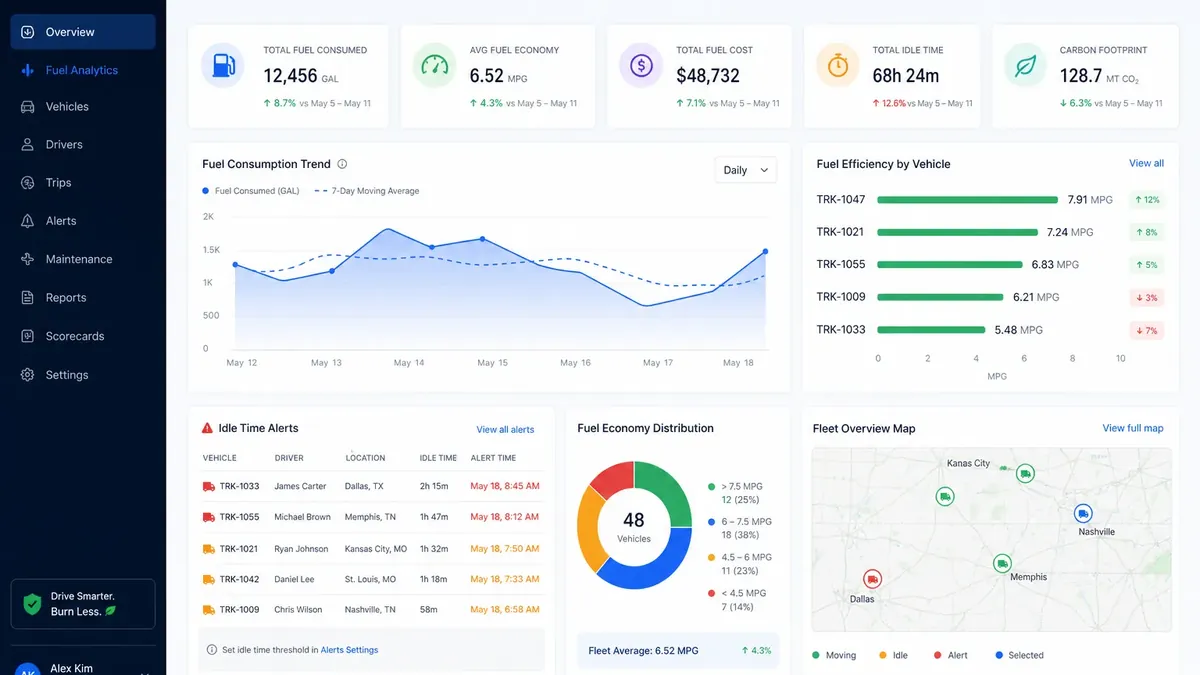
- Empty miles as a percentage of total miles
- On-time pickup and delivery rate
- Loads per truck per week
- Average dwell time at customer sites
- Revenue per mile
Lanes or customers with long dwell times or regular empty returns are good candidates for renegotiation or better planning.
A day with better dispatching
In the morning, the dispatcher sees every truck's location, its driver's available hours and the day's loads on one screen. Loads are assigned to the closest suitable vehicles and sent straight to driver apps. During the day, alerts flag a delay at a customer site, so the dispatcher rebalances the next pickup to another nearby truck. Deliveries are closed with digital proof of delivery, and by the end of the day the manager can see on-time performance and empty miles for every vehicle.
How Viqsa helps
Viqsa Truck Management brings real-time fleet tracking, intelligent scheduling and dispatch, route optimisation, job and delivery management and digital proof of delivery into one platform. Drivers receive dispatches, routes and documents in the mobile app, while managers get automated reports on delivery performance, utilisation and costs.
Key takeaway: Reducing empty miles starts with visibility. When dispatchers can see locations, hours and upcoming loads together, they can build smarter routes, pair backhauls and keep every truck earning.