For trucking companies, compliance is not optional. Hours of service violations can lead to fines, out-of-service orders and damaged safety scores. More importantly, the rules exist to prevent fatigue-related crashes.
This guide gives fleet managers a practical overview of hours of service (HOS), electronic logging devices (ELDs) and the day-to-day processes that keep a fleet audit-ready.
This article is a general overview. Always check the latest official guidance from the FMCSA and your local regulators, as rules and exceptions change.
US hours of service basics
For property-carrying drivers in the United States, the core FMCSA hours of service limits are:
- 11-hour driving limit: up to 11 hours of driving after 10 consecutive hours off duty.
- 14-hour limit: driving is not allowed beyond the 14th consecutive hour after coming on duty.
- 30-minute break: required after 8 cumulative hours of driving without at least a 30-minute interruption.
- 60/70-hour limit: no driving after 60 hours on duty in 7 consecutive days, or 70 hours in 8 consecutive days.
- 34-hour restart: a driver may restart the 7/8-day period after 34 or more consecutive hours off duty.
There are exceptions, such as the short-haul exception and adverse driving conditions, so check which apply to your operation.
The ELD mandate
The FMCSA ELD rule requires most drivers who must keep records of duty status to use an electronic logging device. The ELD connects to the vehicle's engine and automatically records driving time, which makes logs more accurate and harder to falsify than paper.
Canada has its own ELD requirements for federally regulated carriers, with third-party certified devices. Fleets that operate across the border need to meet both sets of rules.
Inspections and DVIRs
Compliance is not only about hours. Drivers are also expected to inspect their vehicles and report defects. A driver vehicle inspection report (DVIR) documents defects found and whether they were repaired. Pre-trip inspections catch problems before they cause breakdowns or violations on the road.
Common compliance problems
- Unassigned driving time on ELDs that nobody reviews
- Missing or incomplete DVIRs, especially after defects are reported
- Form-and-manner errors, such as missing information in logs
- Poor planning that pushes drivers close to their limits
- Scattered records, making audits slow and stressful
Building a compliance routine
Daily
- Drivers complete pre-trip inspections and submit DVIRs digitally.
- Dispatchers check available hours before assigning loads.
- Managers review alerts for drivers approaching their limits.
Weekly
- Review unassigned driving events and resolve them.
- Check that reported defects have been repaired and signed off.
- Look for patterns, such as routes that regularly run close to HOS limits.
Monthly
- Audit a sample of logs and inspection records.
- Review safety events and coach drivers where needed.
- Confirm driver documents, medical certificates and vehicle registrations are current.
Plan dispatch around hours, not just miles
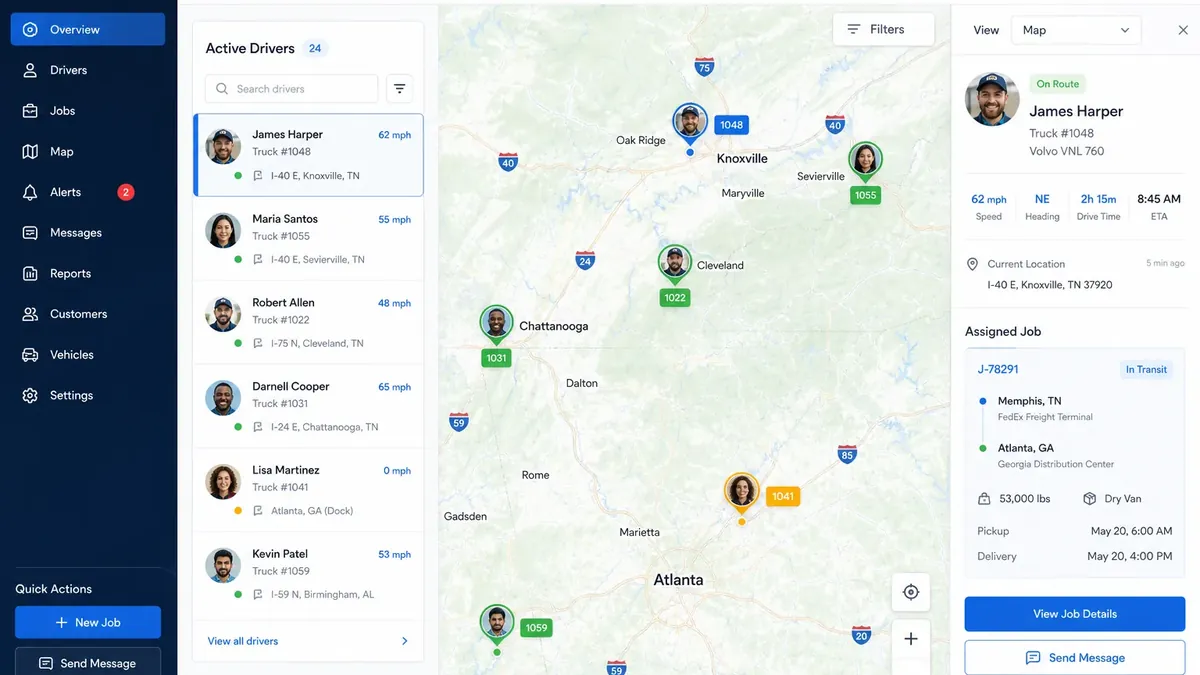
Many violations begin in dispatch. If a load is assigned without checking a driver's remaining hours, the driver is put in a difficult position. Dispatch tools that show available hours next to location help planners make legal, realistic assignments from the start.
Fatigue management goes beyond the rules
Staying within legal limits does not guarantee a driver is well rested. Encourage breaks, plan realistic schedules, and make it easy for drivers to report fatigue without pressure. A culture of safety protects people, equipment and your business.
How Viqsa supports compliance
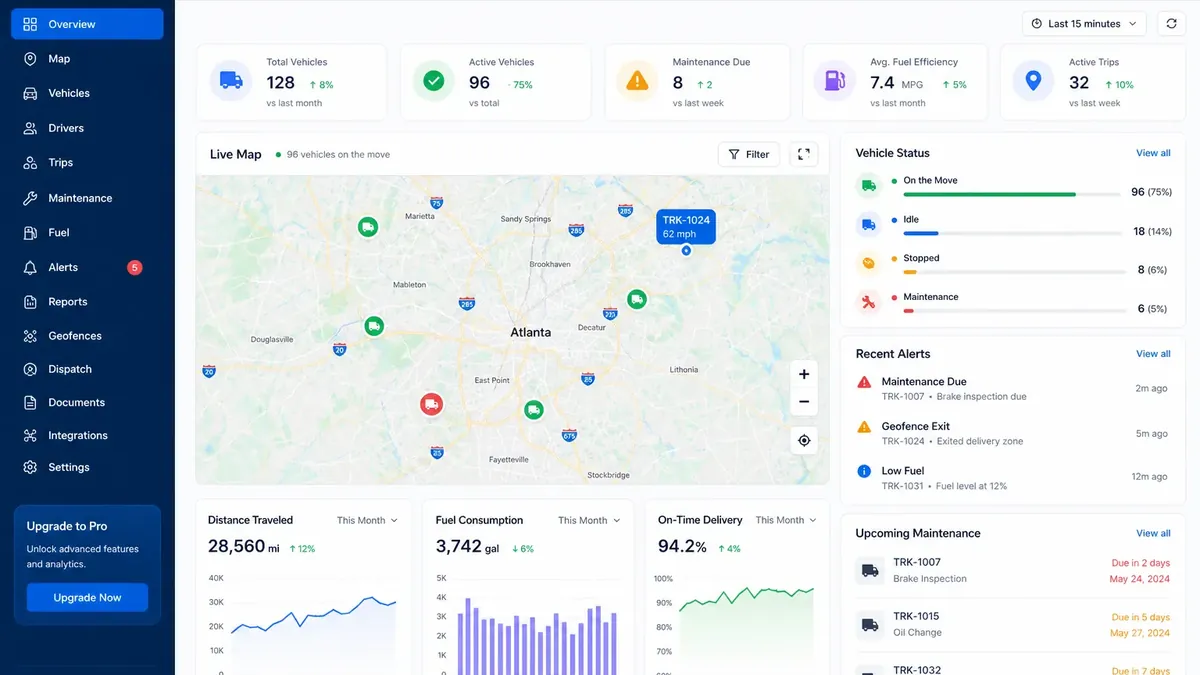
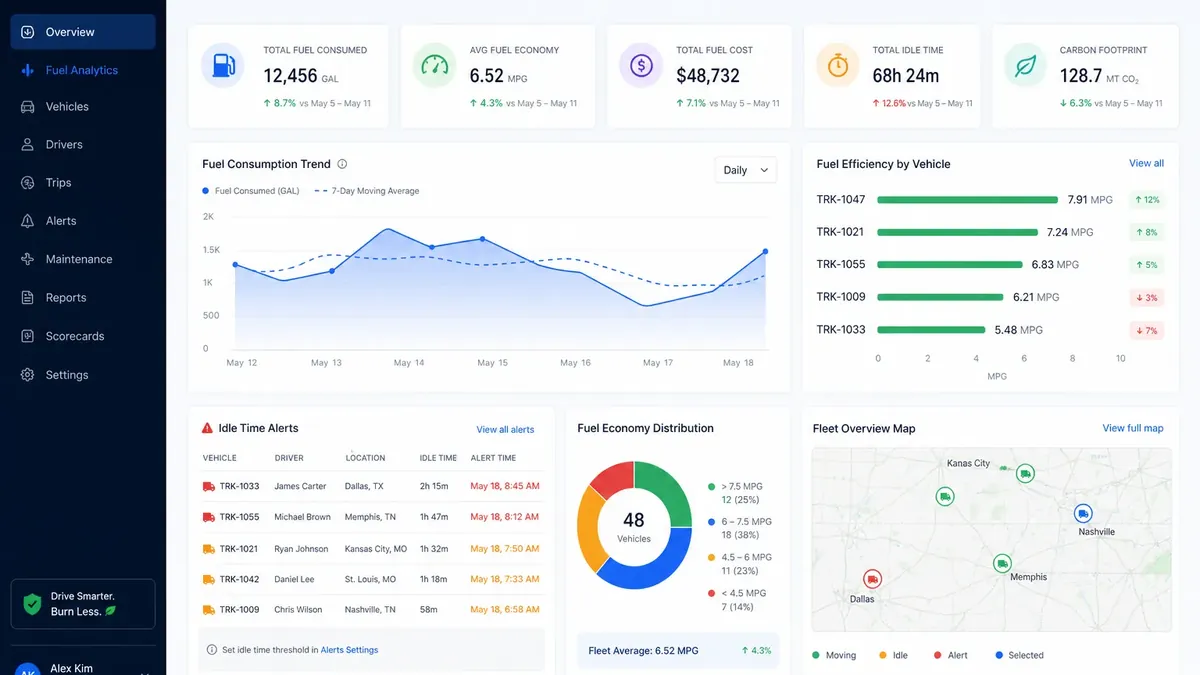
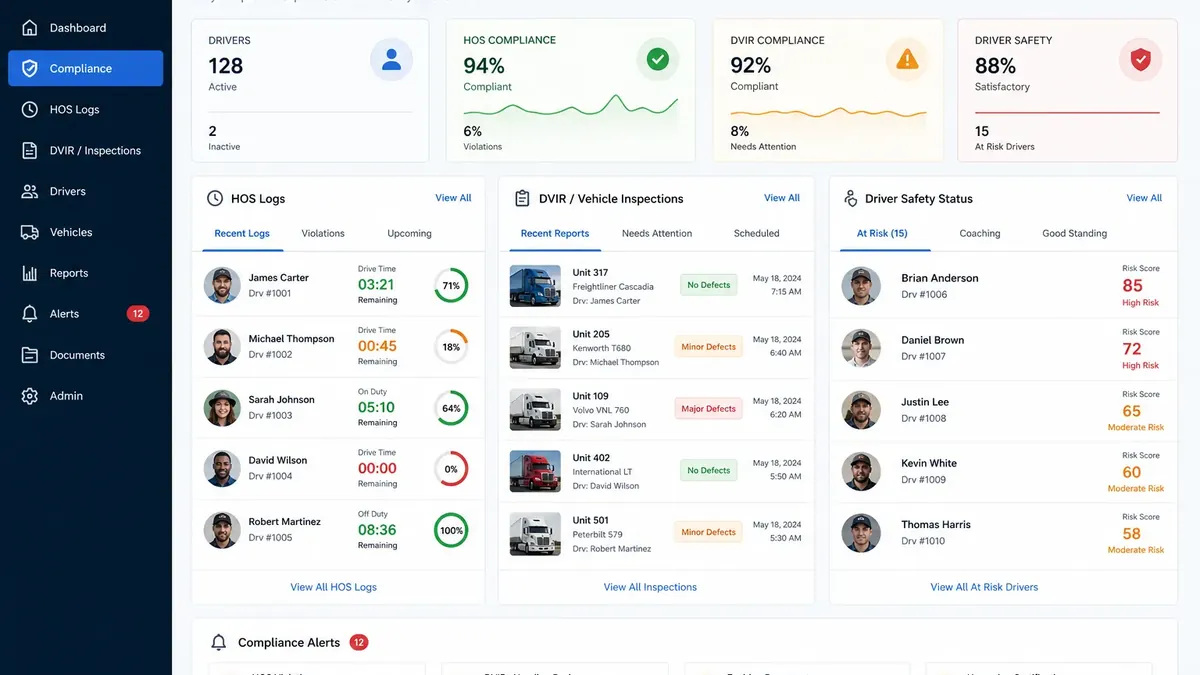
Viqsa Truck Management includes ELD integration, HOS tracking and digital driver logs, DVIR records and pre-start inspection checklists. Fatigue management and break scheduling help monitor driver working hours, while dispatchers see driver availability alongside live location. Records are stored centrally, so audits are faster and less stressful.
Key takeaway: Compliance works best as a routine, not a scramble before an audit. Combine accurate ELD data, digital inspections and dispatch planning that respects hours of service, and review the records regularly.