For office staff, attendance is simple: badge in at the door. For field teams, it is much harder. Workers start at different sites, travel between jobs and finish wherever the last task ends. Traditional timesheets and phone check-ins leave plenty of room for mistakes, disputes and occasionally abuse.
GPS attendance solves this by recording when and where each worker checks in and out, directly from their phone.
The problem with traditional timesheets
- Rounding and memory errors. Timesheets filled in at the end of the week rely on memory, not records.
- Buddy punching. One employee clocks in for another who has not arrived yet.
- Disputes. Without evidence, disagreements about hours or site visits become one person's word against another's.
- Admin time. Supervisors spend hours collecting, checking and correcting timesheets before payroll.
- No link to jobs. Hours are recorded, but not which customer or site they belong to.
How GPS attendance works
- The worker opens the mobile app at the start of a shift and taps check in.
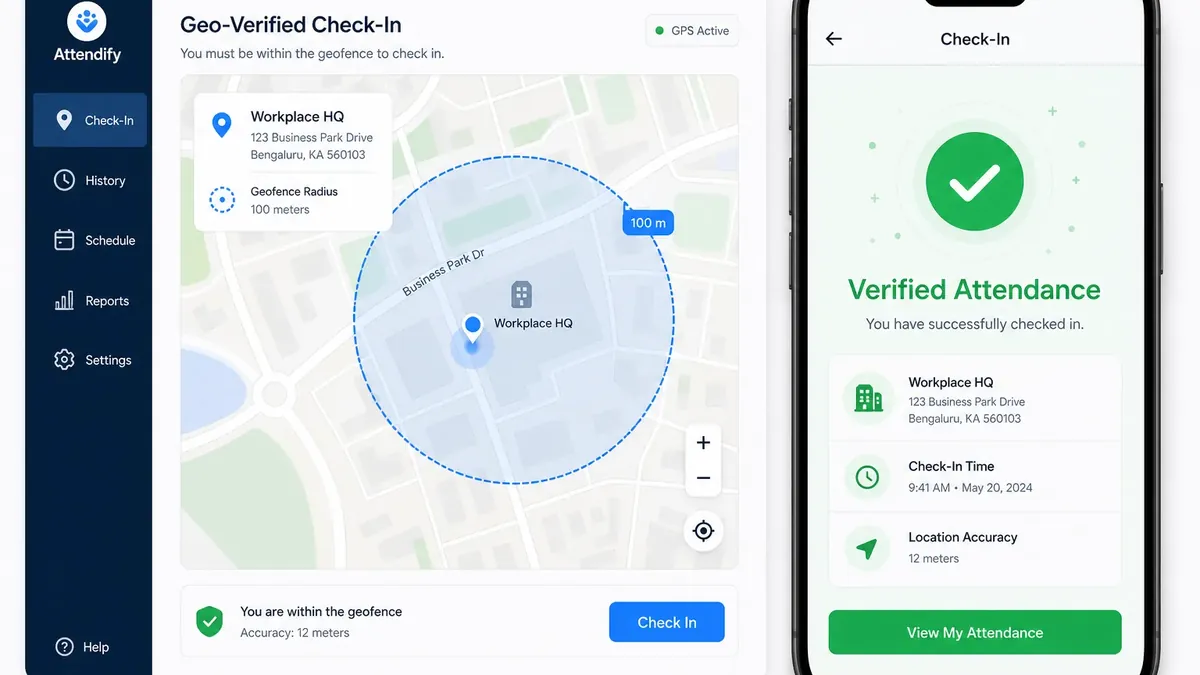
- The app records the time and the device's location.
- If the site has a geofence, a virtual boundary around the address, the system can confirm the worker is actually on site or flag check-ins made elsewhere.
- Breaks, site changes and check-out are recorded the same way.
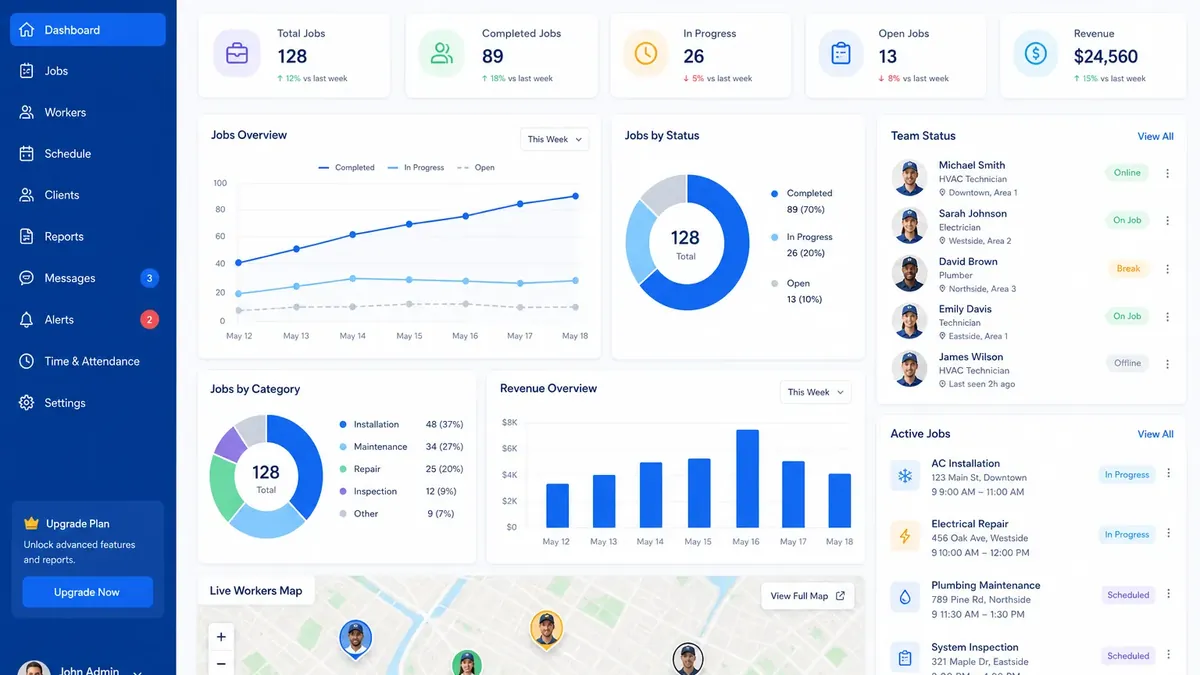
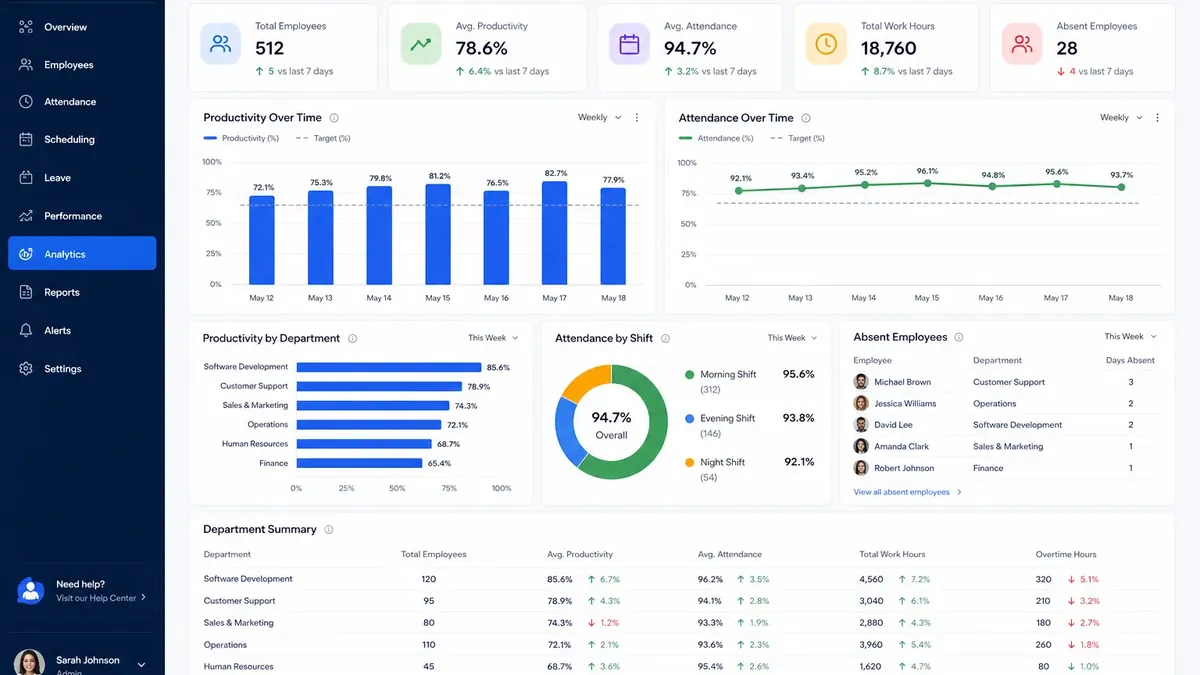
- Managers see attendance in real time and receive alerts for late starts, missed check-ins or early departures.
Many systems also support photo capture at check-in to confirm the right person is checking in, which helps prevent buddy punching.
Benefits for the business
More accurate payroll
Location-stamped records remove guesswork. Hours flow into payroll reports without manual re-entry, reducing overpayments and corrections.
Proof for customers
For service contracts, security patrols and cleaning schedules, geo-verified check-ins show customers exactly when staff were on site.
Faster issue response
If a worker has not checked in at a critical site, supervisors know immediately and can arrange cover before the customer notices.
Less administrative work
Supervisors stop chasing paper timesheets and spend more time supporting their teams.
Benefits for workers
Accurate records protect employees too. Workers who put in long days have clear evidence of their hours, and disputes about attendance can be settled with data rather than argument.
Introducing GPS attendance fairly
Location tracking can feel intrusive if it is introduced badly. A few principles help:
- Be transparent. Explain what is recorded, when and why, in writing.
- Track working time only. Location should be recorded during shifts and check-ins, not outside working hours.
- Focus on support, not suspicion. Present it as a tool for accurate pay and faster help, not surveillance.
- Follow local law. Employment and privacy rules vary by country and state, so review your policy with an advisor.
- Give workers access to their records. Seeing their own attendance history builds trust.
Rolling it out
Start with a pilot team and one or two sites. Set up geofences for regular locations, agree on rules for breaks and travel time, and review the first few weeks of data with supervisors. Adjust settings, such as geofence size and alert thresholds, before rolling out to the whole workforce.
Beyond attendance
Attendance data becomes even more useful when it connects to jobs. Knowing that a worker was on site is good; knowing which job they completed, how long it took and whether the customer signed off is better.
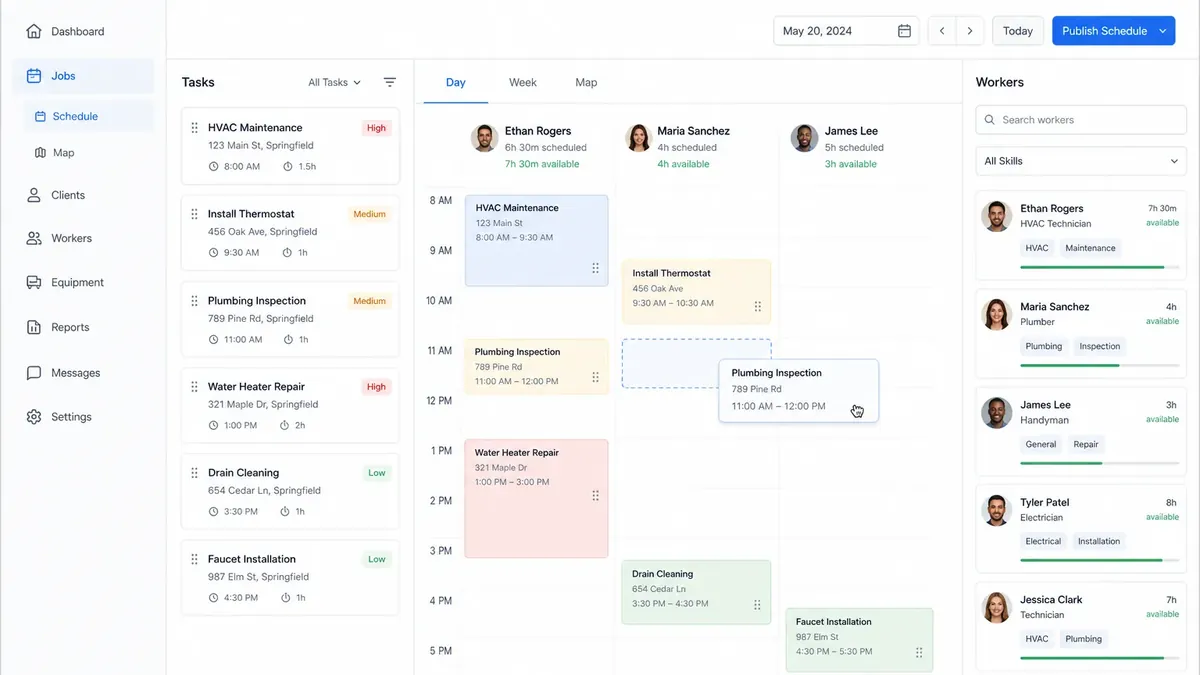
The Viqsa Field Worker Management System combines GPS attendance and time management with geo-verified client visits, real-time location tracking and task assignment. Check-ins, job records, photos and customer signatures sit together, helping improve attendance accuracy and payroll accuracy while reducing supervisor follow-up calls.
Key takeaway: GPS attendance replaces estimates with verifiable records. Introduced transparently and limited to working hours, it improves payroll accuracy, protects both the business and its workers, and saves supervisors hours every week.