
Revenue management can sound like something only large hotel chains with dedicated analysts do. In reality, its core idea is simple: sell the right room to the right guest at the right price at the right time. Independent hotels can apply it with a few key metrics and a regular review routine.
The three core metrics
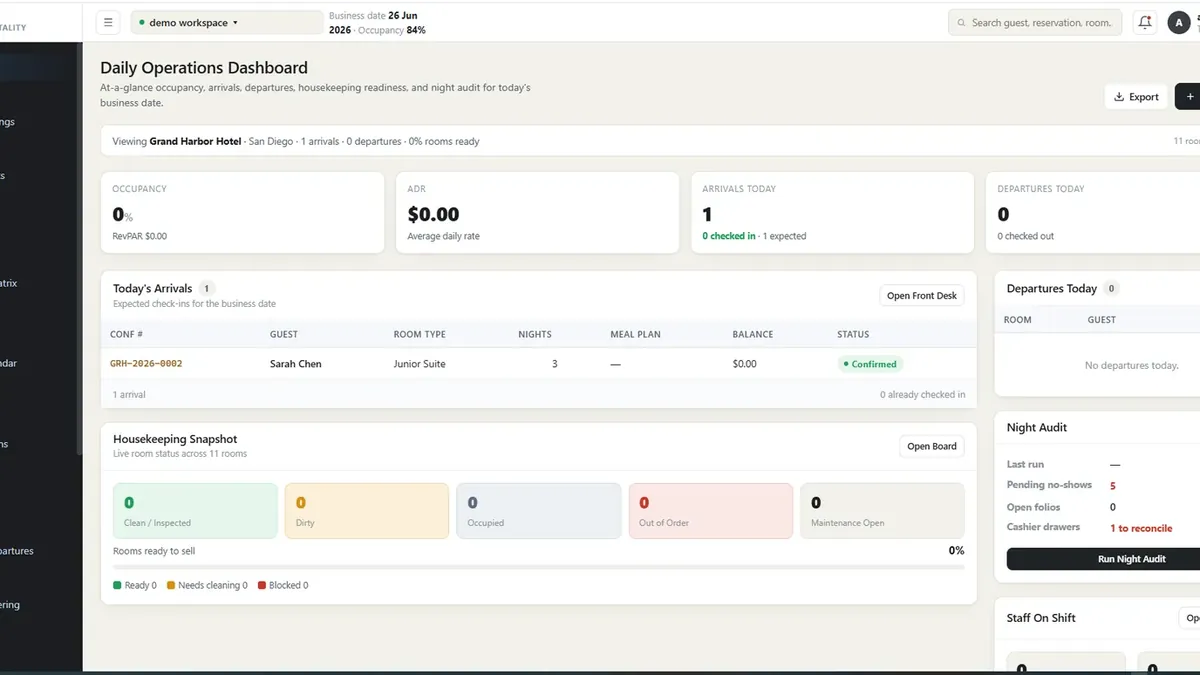
Occupancy rate
Occupancy = Rooms sold ÷ Rooms available
Occupancy shows how full the hotel is. It is useful, but on its own it can be misleading, because you can always fill more rooms by cutting prices.
Average daily rate (ADR)
ADR = Room revenue ÷ Rooms sold
ADR shows the average price paid per occupied room. It tells you about pricing, but not about how many rooms went unsold.
Revenue per available room (RevPAR)
RevPAR = Room revenue ÷ Rooms available, which is the same as ADR × Occupancy
RevPAR combines price and occupancy into one number. It is the most widely used measure of room revenue performance because it rewards selling more rooms and selling them at better prices.
A worked example
A 40-room hotel over a 30-day month has 1,200 room nights available.
- Rooms sold: 900
- Room revenue: $117,000
That gives:
- Occupancy: 900 ÷ 1,200 = 75%
- ADR: $117,000 ÷ 900 = $130
- RevPAR: $117,000 ÷ 1,200 = $97.50 (or $130 × 75%)
If the hotel had cut rates to sell more rooms, occupancy might have risen while ADR fell. RevPAR shows whether the trade-off actually increased revenue.
Practical revenue management for independent hotels
1. Know your demand patterns
Look at past occupancy and booking pace by day of week, season and local event. Most hotels have predictable busy and quiet periods.
2. Price by demand, not habit
Raise rates when demand is strong and use offers or packages to stimulate quieter periods. Avoid keeping the same rate all year.
3. Watch booking pace
Compare bookings on hand for future dates with the same point last year. If a date is filling faster than usual, there may be room to increase rates.
4. Use length-of-stay rules carefully
Minimum stay requirements on peak nights can prevent short bookings from blocking longer, more valuable stays.
5. Understand your channel costs
A booking with a high commission can be worth less than a slightly cheaper direct booking. Look at net revenue by channel, not just gross.
6. Keep an eye on the market
Know how comparable nearby properties are pricing, but do not simply copy them. Your location, reviews and amenities justify your own positioning.
7. Review regularly
Revenue management works best as a routine: a quick daily check of pickup and a deeper weekly review of the next few months.
Beyond rooms
Total revenue also includes food and beverage, extras and services. Some hotels track TRevPAR (total revenue per available room) to capture the full picture, especially when packages or on-site services are important.
Where the data comes from
All of these metrics depend on accurate, up-to-date data on reservations, rates and revenue, which lives in your property management system. Reports that calculate occupancy, ADR and RevPAR automatically save hours of spreadsheet work and let you act while it still matters.
Viqsa Hotel Management System helps hotels maximise revenue with data-driven decisions, using real-time insights on bookings, pricing and channel performance alongside day-to-day operations. Owners and managers can turn operational data into actionable reports without exporting data by hand.
Key takeaway: Occupancy tells you how full you are, ADR tells you what guests pay and RevPAR tells you how well you combine the two. Track all three, price by demand and review regularly to grow room revenue.